
What is a Bezel Setting? The Ultimate Guide to Jewelry Settings & Larimar
What is a Setting in Jewelry?

A jewelry setting is the metal structure that holds your stone securely in place, serving as the essential foundation of any piece. The setting is critical to protecting your investment—an expensive gemstone held in place by a low-quality setting is far more likely to get damaged, broken, or lost completely. Among the most secure setting styles for Larimar Jewelry is the bezel setting—a classic technique valued for its sleek appearance, protective frame, and long-lasting durability.
What is a Bezel Setting?

A bezel setting is a method of holding a gemstone in place by surrounding it with a continuous rim of metal. Unlike prong settings, which hold a stone in place using tiny metal claws, a bezel setting wraps around the entire perimeter of the stone to hold it firmly inside a custom-fit collar.
History & Background

As one of the oldest and most revered stone-setting techniques in jewelry history, the bezel setting traces its lineage back to the master artisans of the ancient Mesopotamian, Egyptian, and Minoan civilizations. Long before the advent of modern prong settings, setting a gemstone required extraordinary patience, precision, and hand skill. Craftsmen painstakingly hand-hammered and shaped fine rims of precious metal around cabochons, intricate cameo carvings, and royal seals—flawlessly encapsulating each stone into iconic rings, sacred amulets, and regal crowns.
While modern jewelers utilize precision tools and micro-saws for improved efficiency, the core technique and craftsmanship remains as rigorous today as it was with ancient hand-hammering techniques.
Why Bezel Settings Are So Important for Larimar

Bezel settings offer superior protection compared to virtually any other mounting style:
- Chipping Protection: By wrapping metal entirely around the stone's edges (girdle), it protects gemstones from chips and accidental impacts.
- No Snagging: Without sharp prongs to catch on clothing, hair, or knitwear, bezel settings are ideal for active lifestyles and daily wear.
- Long-lasting: Metal rims wear evenly over time without the risk of individual prongs bending open or snapping off.
- Secure Mounting for Smooth Stones: Because cabochons lack facets or sharp corners for prongs to grasp, a custom metal collar securely holds the smooth dome in place without slipping.
- Why Glue Fails: Larimar is a smooth, non-porous gemstone, which prevents adhesives from establishing a strong bond with the surface. Over time, exposure to moisture, soaps, and daily wear causes glue to deteriorate and fail, leading to the gemstone detaching from its mounting.
- Limitations of Prongs: Traditional prongs rely on facets, sharp angles, or girdles to grip a faceted stone. Because smooth cabochons lack these features, prongs exert uneven point pressure that can chip the stone. Furthermore, silver is too malleable to securely hold larger stones—while it works well for delicate micro-pave setting, it lacks the structural rigidity needed to hold larger, substantial cabochons like Larimar reliably over time, making a protective bezel setting essential.
Maintenance and Care

While bezel settings are exceptionally durable, the small seam where the metal collar meets the gemstone can collect dirt, lotion, soap residue, and body oils over time. Regular care helps keep your jewelry looking bright:
- Gentle Cleaning: Soak the piece in warm, phosphate-free soapy water and gently clean around the inner bezel edge using a soft-bristled toothbrush to remove trapped buildup.
- Avoid Harsh Chemicals: Avoid abrasive cleaners or harsh chemicals that can dull natural gemstones like Larimar or damage the metal border.
- Note on Minor Movement: Sometimes, a bezel-set stone may exhibit very slight movement even when completely secure. Jewelers occasionally avoid over-burnishing out of caution to prevent applying excessive pressure that could crack gemstones like Larimar.
- Periodic Inspection: Occasionally check the rim to ensure the metal remains tight against the stone and has not shifted or worn unevenly over years of wear.
Frequently Asked Questions
What is a bezel setting?
A bezel setting is a jewelry mounting method that secures a gemstone by surrounding its entire perimeter with a continuous rim or collar of metal.
Why are bezel settings ideal for Larimar?
Smooth cabochons like Larimar lack facets or sharp angles for traditional prongs to grip, making a custom metal bezel essential for holding the dome securely without chipping or slipping.
Are bezel settings more secure than prong settings?
Yes, bezel settings completely wrap around the stone's edges (girdle), offering superior protection against chipping, snagging on clothing, and prong bending over time.
Why can't glue be used to hold Larimar stones?
Adhesives break down when exposed to daily wear, moisture, and soap, eventually causing stones to detach from their mountings.
Why do some low-cost jewelry companies use glue instead of bezel settings?
Glue is a cheap, fast shortcut commonly used in mass-produced fashion jewelry to lower production costs. However, it is not a valid or durable method for mounting quality gemstone jewelry like Larimar, as adhesives inevitably degrade and cause stones to fall out over time.
How do I clean bezel-set Larimar jewelry?
Soak your jewelry in warm, phosphate-free soapy water and gently clean around the inner bezel edge with a soft-bristled toothbrush to clear away any accumulated dirt or oils.
How can I tell what type of setting a piece has when looking at photos online?
To identify the setting type in online photos, look for key visual details around the gemstone:
Bezel Setting: Look for a continuous rim or collar of metal entirely encapsulating or outlining the perimeter of the stone.
Prong Setting: Look for individual metal claws, tabs, or posts reaching over the edge or corners of the stone to grip it.
Watch Out for 'Fake Bezels': Be aware that online photos can sometimes make it difficult to distinguish a genuine bezel setting from a "fake bezel." In a faux setting, glue or a decorative rim is placed along the sides of the stone, but no metal is actually burnished or pressed over the top edge to physically hold and secure the gemstone in place.
What does it mean if my bezel-set stone starts to wobble?
First, rest assured that your stone is still secure—the continuous metal rim acts as a protective barrier that holds it safely in place and prevents it from falling out. Minor movement can occasionally occur if a hand-cut stone does not sit completely flat against the base, creating a slight amount of play within the setting. Additionally, stone setters must exercise extreme precision when folding the silver rim over the gemstone; applying too much pressure risks cracking or damaging the Larimar.
Discover the World of Larimar
Guides, insights, and inspiration to help you choose, understand, and care for this rare Caribbean gemstone.
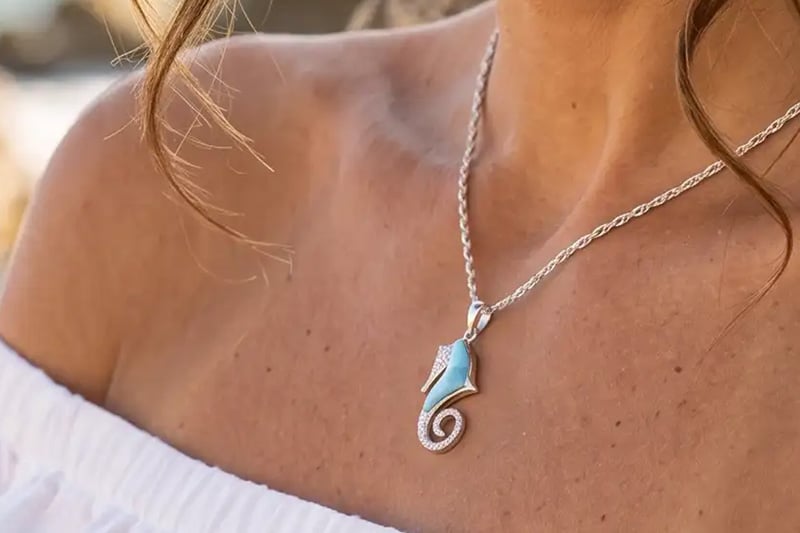
The Complete Larimar Jewelry Buying Guide
Learn what makes Larimar so special, how to evaluate quality, and what to look for before you buy.
Read the Article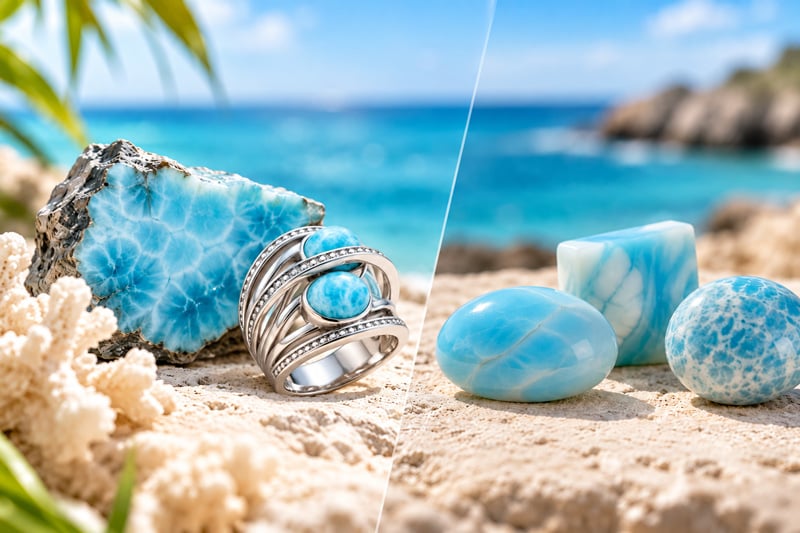
Real vs. Fake Larimar
Discover the key differences between genuine Larimar and imitations, and learn how to spot an authentic stone with confidence.
Read the Article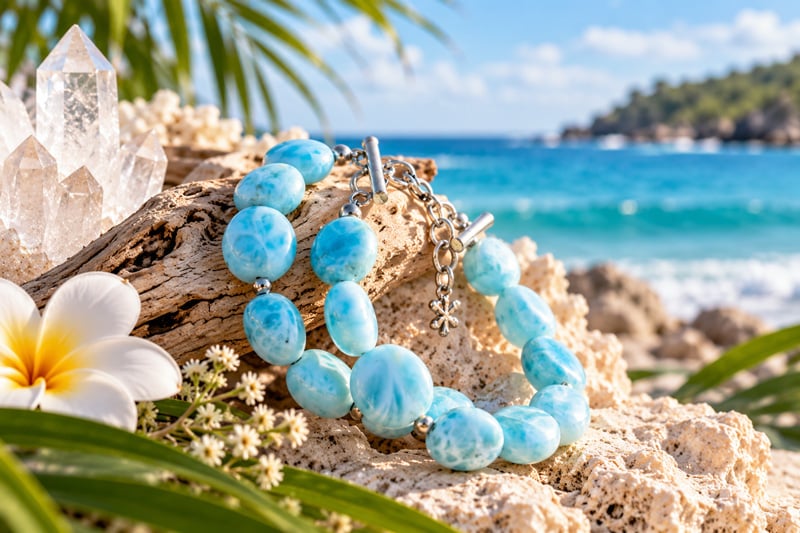
Larimar Metaphysical Properties
Explore the meanings, healing traditions, and spiritual symbolism associated with this rare ocean-blue gemstone.
Read the Article
The Science of Silver
Explore the real causes of silver tarnish and how everyday exposure affects the shine of your favorite heirloom settings.
Read the Article